
Private Nurse Versus Caregiver – Which Fits?
A parent comes home after surgery with new medication, a wound that needs attention, and instructions that feel difficult to manage alone. An older adult may be safe walking around the house but need help with meals, bathing, and companionship each day. In both situations, families often ask the same question: private nurse versus caregiver – which professional does my loved one need?
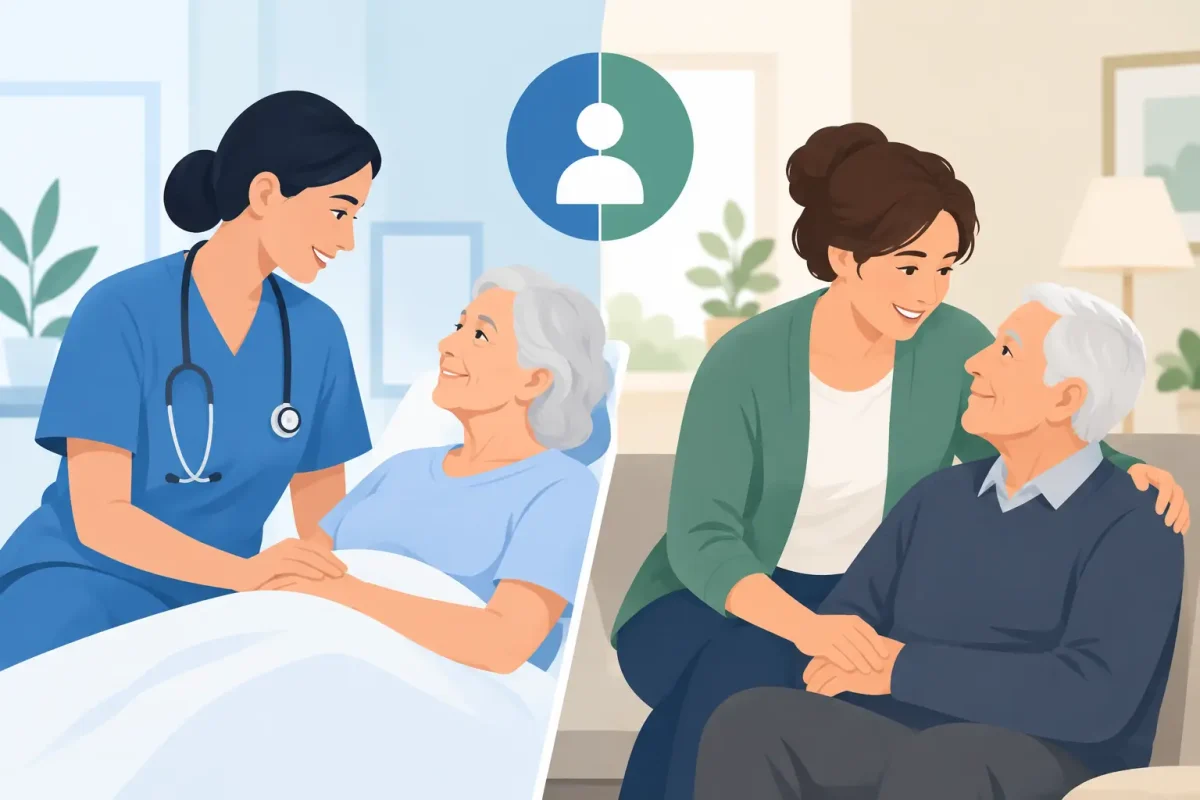
The right answer depends less on job titles and more on the level of clinical care required. A private nurse provides licensed medical support. A caregiver provides practical, personal, and emotional assistance with daily living. Both can make home life safer and less stressful, but they are not interchangeable.
Private Nurse Versus Caregiver: The Core Difference
A private nurse is a licensed healthcare professional, such as a registered nurse or practical nurse, who has the clinical training to assess health concerns and perform medical tasks within their professional scope. They may support recovery after hospitalization, manage chronic conditions, monitor symptoms, administer prescribed treatments, and communicate changes that may need medical attention.
A caregiver is focused on non-medical daily support. Depending on the individual’s needs and the caregiver’s role, this can include help with bathing, dressing, meal preparation, mobility, light household tasks, reminders, transportation coordination, and companionship. Caregivers often become a reassuring presence for clients who want to remain comfortable and independent at home.
The distinction matters because a caring, capable person should not be asked to perform medical duties they are not trained or licensed to provide. When care needs move beyond routine assistance, clinical oversight protects the patient and gives the family greater confidence.
What a Private Nurse Can Do at Home
Private nursing is appropriate when the care plan involves medical judgment, skilled procedures, or close health monitoring. A nurse begins by understanding the patient’s diagnosis, physician instructions, medications, mobility, symptoms, and home environment. That assessment helps shape a care plan around the patient rather than trying to fit the patient into a fixed routine.
At home, a licensed nurse may provide services such as medication administration, injections, IV therapy when prescribed and appropriate, wound care, catheter care, ostomy support, blood sugar checks, vital-sign monitoring, and post-operative observation. They may also support patients with diabetes, high blood pressure, respiratory conditions, neurological conditions, cancer care needs, or other chronic health concerns.
Nursing care is also valuable when a patient’s condition is changing. A new fever, increased confusion, unusual swelling, reduced appetite, breathing changes, or a wound that is not healing properly may require clinical observation. A private nurse cannot replace emergency care or a treating physician, but they can recognize concerning changes, follow the established plan, and help the family respond promptly.
Education is another major part of the role. Families may need to learn how to use equipment safely, understand warning signs, organize medications, prevent falls, or care for a loved one after discharge. Clear instruction can reduce avoidable anxiety and make transitions from hospital to home more manageable.
When nursing care is the better fit
Consider a private nurse when there is a new diagnosis, a recent surgery, a complex medication schedule, a wound, prescribed injections or infusions, or a need for regular clinical monitoring. Nursing support may also be the right choice for a frail older adult whose health status can change quickly, even if they also need help with routine activities.
For some families, nursing is arranged for a short period, such as the first days after surgery or childbirth. For others, it becomes part of an ongoing chronic care plan. The schedule can range from a single visit to regular shifts, depending on the clinical need and the physician’s guidance.
What a Caregiver Can Do at Home
A caregiver helps make the everyday parts of life more manageable. This is especially meaningful for seniors, people recovering their strength, new parents, and adults whose mobility or memory challenges make routine tasks tiring or unsafe.
Personal care may include assistance with bathing, grooming, dressing, toileting, transfers, and safe movement around the home. Caregivers can prepare meals aligned with the family’s preferences, encourage hydration, offer companionship, and help maintain a predictable daily routine. For someone living alone, having a reliable person nearby can lessen isolation while giving relatives peace of mind.
Caregivers also support independence. The goal is not always to do everything for the client. Often, the best care involves helping someone do as much as they safely can, while stepping in where assistance prevents a fall, missed meal, or exhausting task.
When caregiver support is the better fit
A caregiver may be the best starting point when the main concerns are daily living, mobility support, supervision, companionship, or relief for an exhausted family member. For example, an older adult with stable health may not need a nurse every day but may benefit greatly from help with breakfast, bathing, errands, and a walk around the neighborhood.
Caregiver support can also give family caregivers time to work, sleep, attend appointments, or simply be a spouse, son, daughter, or friend rather than managing every care task alone. That relief is not a luxury. It can help families sustain care with greater patience and consistency.
Can a Private Nurse and Caregiver Work Together?
Yes. In many homes, the strongest plan combines both roles. A nurse can manage the clinical elements of care and review the patient’s health status, while a caregiver provides dependable day-to-day help between nursing visits.
Consider a person recovering from a stroke. A nurse may monitor blood pressure, medications, skin integrity, nutrition concerns, and signs of complications. A caregiver may help with safe transfers, meals, personal care, and companionship. Their responsibilities are different, but their work supports the same goal: helping the patient remain safe, comfortable, and engaged at home.
This combined approach can be particularly useful for long-term conditions. It avoids paying for intensive clinical care when non-medical assistance is sufficient, while ensuring medical concerns are handled by qualified professionals when they arise.
Questions to Ask Before Choosing In-Home Support
Start with the patient’s current needs, not only their diagnosis. Ask whether they need hands-on medical treatment, monitoring, or help managing a condition that may worsen. If the answer is yes, speak with a licensed nurse or the patient’s physician about an appropriate plan.
Then consider the practical side of the day. Is the patient eating well, bathing safely, taking prescribed medication on time, moving without a high risk of falling, and receiving enough social interaction? If these areas are the main challenge, caregiver support may be a good fit.
It also helps to think ahead. A person may be stable today but likely to need more support after a procedure, during a difficult treatment period, or as a chronic condition progresses. Choosing a provider that can adjust the level of care can prevent families from having to restart the search during an already stressful moment.
Before arranging services, ask clear questions about licensing, training, supervision, availability, documentation, and communication with family members. For medical needs, confirm that the professional is appropriately licensed and that care is delivered according to the treating physician’s instructions. For all types of home care, families should understand who to contact if needs change outside normal hours.
Choosing Care That Feels Safe and Personal
Cost matters, and private nursing generally costs more than non-medical caregiving because it requires clinical licensure and specialized skills. Yet choosing solely on the lowest hourly rate can create problems if a patient needs care beyond a caregiver’s permitted role. Matching the service to the actual need is safer and often more cost-effective over time.
At Besthomecare / Prima Vita Clinic, families can arrange DHA-licensed nursing support in Dubai and surrounding UAE areas, with care designed around the patient’s condition, schedule, and home setting. The focus is not simply on completing a visit. It is on providing qualified care, clear communication, and practical reassurance when families need it most.
If you are unsure where to begin, describe the patient’s daily challenges and any medical instructions in detail when requesting care. A thoughtful assessment can clarify whether a caregiver, a private nurse, or a combination of both will help your loved one feel safer and more supported at home.
