
Doctor House Calls Versus Telemedicine Compared
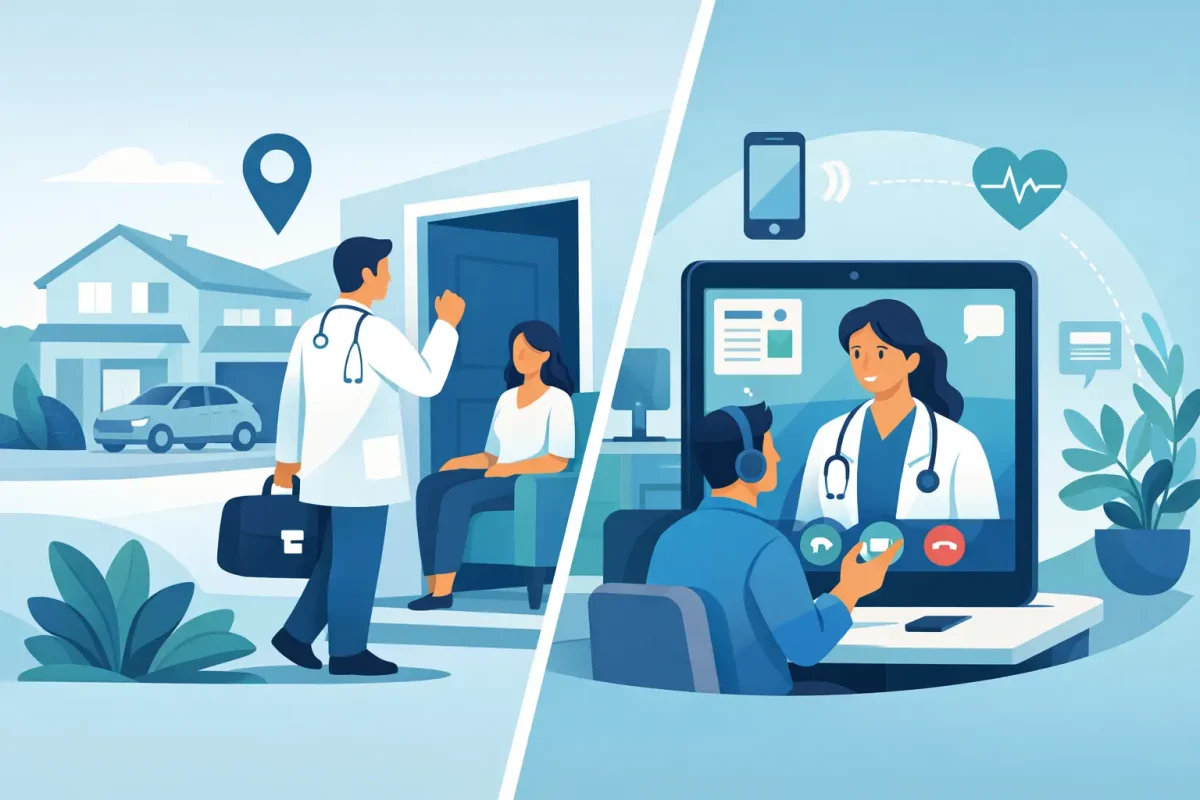
A child develops a fever after bedtime. An older parent is suddenly more tired than usual. You need medical guidance, but sitting in traffic, finding parking, and waiting in a clinic may feel like the last thing your family can manage. In these moments, doctor house calls versus telemedicine is not simply a question of convenience. It is a decision about how much clinical assessment the situation requires.
Both options can bring qualified care closer to the patient. Telemedicine provides a fast conversation with a clinician through a phone or video consultation. A doctor home visit brings a licensed medical professional to the home, hotel, or office for a direct assessment. The right choice depends on symptoms, the patient’s condition, and whether the clinician needs to examine the person in front of them.
Doctor House Calls Versus Telemedicine: The Core Difference
Telemedicine is designed for clinical conversations that can be safely handled remotely. It is often useful when a patient needs advice, a medication review, follow-up guidance, or an initial assessment of mild and familiar symptoms. The clinician can ask focused questions, review health history, observe certain visible concerns by video, and advise on next steps.
A house call allows for a more complete in-person evaluation. The doctor can assess appearance and mobility, listen to the heart and lungs, examine a painful area, check vital signs, and determine whether testing or additional support is needed. That distinction matters when symptoms are new, worsening, difficult to describe, or affecting a patient who is medically vulnerable.
Neither service replaces emergency care. They serve different levels of need, and choosing appropriately helps patients receive timely attention without unnecessary stress.
When Telemedicine Is a Good First Step
A virtual consultation can be the practical choice for a busy professional who needs to discuss a recurring migraine, a parent seeking advice for a mild rash, or a patient who needs clarification about medication instructions. It can also support follow-up after a recent illness when the patient is stable and the main need is guidance rather than a hands-on examination.
Telemedicine is especially valuable when speed and access are the priority. There is no travel time, and the consultation can often begin from home, work, or a hotel room. For patients managing chronic conditions, it may also make regular check-ins easier to maintain.
Still, a video call has limits. A clinician cannot reliably listen to the lungs through a screen, feel abdominal tenderness, perform certain neurological checks, or collect a lab sample during a remote consultation. Lighting, camera quality, and a patient’s ability to describe symptoms can also affect the assessment. If the clinical picture is unclear, the safest next step may be an in-person visit.
When a Doctor Home Visit Is More Appropriate
A doctor home visit is often the better choice when a patient needs an examination but cannot easily or comfortably get to a clinic. This includes elderly adults, people recovering after surgery, new mothers, young children, and patients whose pain, weakness, or mobility concerns make travel difficult.
It can also be appropriate for symptoms that need more than a conversation. A doctor may need to check blood pressure, oxygen levels, temperature, hydration, breathing, swelling, or the progression of an infection. In the home setting, the physician can also see factors that may affect recovery, such as medication organization, fall risks, caregiver support, and whether the patient is able to eat, drink, and rest comfortably.
For families, the benefit is not only avoiding a clinic visit. It is the reassurance of having a qualified professional assess the patient in a familiar environment and explain what to do next. When appropriate, the visit may be followed by home lab testing, nursing support, IV therapy, physiotherapy, or ongoing monitoring based on the patient’s clinical needs.
How to Choose the Right Level of Care
Before booking, consider the patient’s symptoms, medical history, and how quickly the condition is changing. Four questions can help guide the decision:
- Is the symptom mild, familiar, and stable, or is it new, worsening, or difficult to explain?
- Does the patient need vital signs checked or a physical examination?
- Is the patient elderly, very young, pregnant, recovering from a procedure, or living with a chronic condition?
- Can the patient safely travel to a clinic without causing more discomfort or delay?
If symptoms are mild and the patient is otherwise well, telemedicine may provide the direction you need. If there is uncertainty, a significant change from the patient’s usual condition, or a need for physical assessment, a doctor home visit is generally the more appropriate option.
It also depends on the purpose of the appointment. A short discussion about an established care plan may be well suited to telemedicine. An initial evaluation for persistent fever, dehydration, severe fatigue, chest congestion, worsening pain, or a possible infection usually benefits from an in-person assessment.
Common Situations and the Best-Fit Option
A Child With Fever or Respiratory Symptoms
For a child with a low-grade fever who is alert, drinking fluids, and has familiar mild symptoms, telemedicine may help a parent decide what to monitor at home. If the child is unusually sleepy, breathing differently, refusing fluids, has persistent fever, or has symptoms that concern the parent, an in-person doctor assessment is more reassuring and clinically useful.
An Older Adult With a Change in Condition
Older adults may not always describe symptoms clearly, and a small change can matter more when there are multiple medications or chronic conditions involved. A home visit allows a doctor to assess vital signs, hydration, breathing, mobility, and overall condition directly. It also avoids the physical strain and exposure of a clinic trip for someone who is frail or unwell.
Follow-Up After Surgery or Hospital Discharge
A stable patient may use telemedicine for a quick follow-up question, such as confirming wound-care instructions or discussing a medication concern. When there is swelling, increasing pain, redness, weakness, dizziness, or concern about recovery, a house call gives the clinician a clearer view of what is happening and can support timely escalation if needed.
Chronic Condition Management
Patients managing diabetes, high blood pressure, asthma, or other long-term conditions often benefit from both options. Telemedicine can support routine discussion and care-plan adjustments. Doctor house calls can be more useful when readings are unstable, symptoms have changed, medication adherence is a concern, or the patient needs closer clinical monitoring.
Workplace or Hotel-Based Care
For a working professional with a straightforward concern, telemedicine may prevent an unnecessary interruption to the day. For someone who is too unwell to travel, needs testing, or requires a physical evaluation at an office or hotel, a doctor visit can bring appropriate care directly to the location.
What Safe, Reliable Home-Based Care Should Include
Whether care is delivered by video or in person, qualifications and communication matter. Patients should know who they are speaking with, understand the care plan, and receive clear guidance on what symptoms require further attention. The provider should gather relevant medical history, review medications and allergies, protect privacy, and explain if a clinic or hospital assessment is needed.
For in-home medical services in Dubai, choosing DHA-licensed professionals is an essential trust marker. The care team should also be able to coordinate services when the doctor’s assessment identifies a need for nursing, lab work, rehabilitation, or family education. This continuity can make recovery less stressful, particularly for patients who need more than one type of support.
At Besthomecare / Prima Vita Clinic, home healthcare is built around that practical continuity: responsive booking, licensed professionals, and care that can be arranged where the patient feels most comfortable. For families, having access to round-the-clock support can reduce the uncertainty that often comes with a new symptom or a changing health need.
When to Seek Emergency Help Instead
A home visit or telemedicine consultation should not delay emergency treatment. Call your local emergency number immediately – 998 in the UAE – for symptoms such as:
- Chest pain, severe shortness of breath, or bluish lips or face
- Signs of stroke, including sudden facial drooping, weakness, confusion, or trouble speaking
- Loss of consciousness, seizure, severe bleeding, or a serious injury
- Severe allergic reaction, sudden swelling of the face or throat, or difficulty breathing
For urgent but non-emergency concerns, share the patient’s age, symptoms, medical conditions, medications, and how long the problem has been present when you contact a provider. That simple information helps the care team recommend whether a telemedicine consultation or an in-person doctor visit will give your family the safest, most useful support.
