
Home Doctor Versus Telehealth: Which Fits?
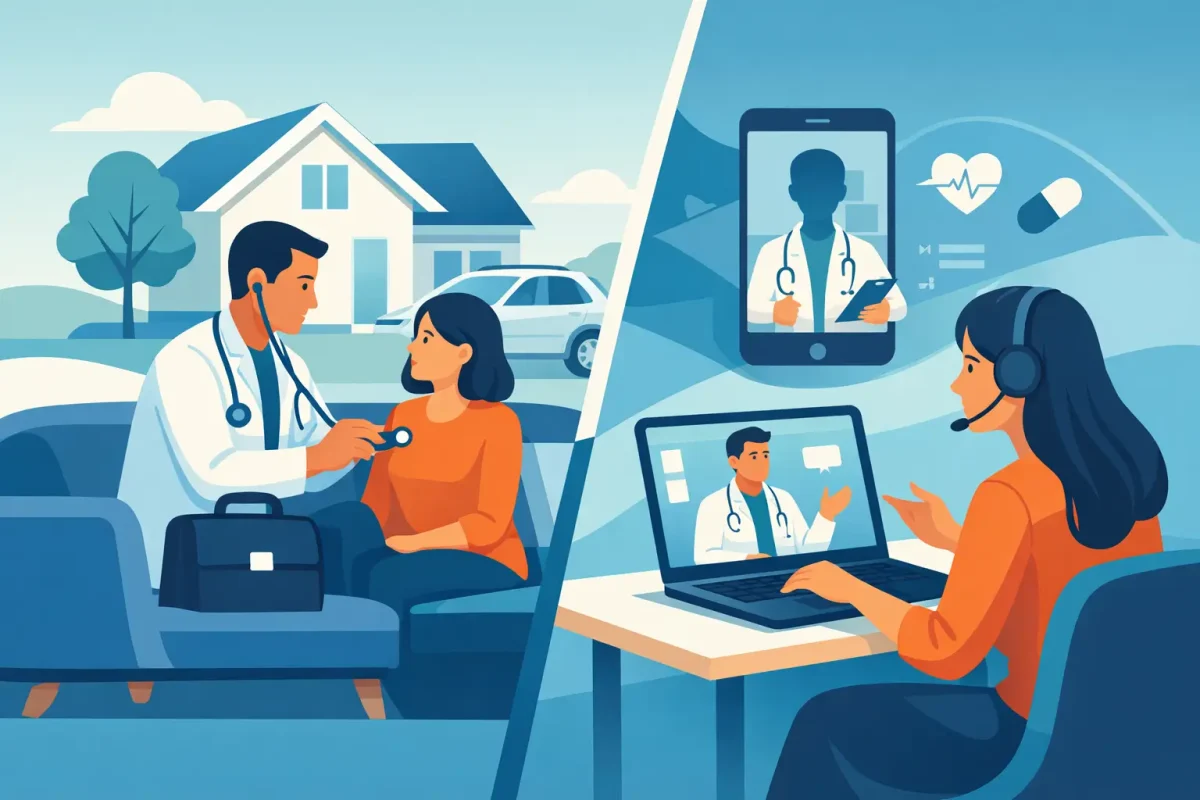
A child develops a fever after bedtime. An elderly parent seems weaker than usual. A busy professional needs a prescription review but cannot leave work. In these moments, the question is rarely whether care is needed. It is whether a home doctor versus telehealth appointment is the safer, more useful choice.
Both options can reduce the stress of traveling to a medical facility, waiting in a crowded reception area, and reorganizing an already demanding day. But they do not provide the same level of assessment. The right choice depends on symptoms, the patient’s age and condition, whether a physical examination is needed, and how quickly care must begin.
Home Doctor Versus Telehealth: The Core Difference
Telehealth connects a patient and clinician by video or phone. It is designed for conversation, visual observation, medical guidance, follow-up discussions, and certain prescription-related needs. For straightforward concerns where a detailed physical exam is unlikely to change the next step, it can be an efficient starting point.
A home doctor visit brings a licensed physician to the patient’s home, hotel, or office. The doctor can speak with the patient and family, but can also assess vital signs, examine the throat, ears, chest, abdomen, skin, joints, or injury site as appropriate. The physician can observe the patient’s surroundings and mobility, which may add valuable context for older adults, people recovering from illness, and those living with chronic conditions.
Telehealth is about rapid remote access. A home doctor visit is about bringing in-person clinical assessment to the patient. Neither is automatically better. The question is what the patient needs at that moment.
When Telehealth Can Be a Practical First Step
Telehealth is often a suitable choice when the main need is advice, follow-up, or a review of symptoms that are mild and stable. It can help a patient decide whether home care, an in-person doctor visit, testing, or urgent evaluation is appropriate.
For example, a patient who has already been diagnosed with a condition may need guidance on managing symptoms, understanding medication instructions, or deciding whether recovery is progressing as expected. A parent may want to discuss a child’s mild symptoms before determining whether an examination is necessary. A working adult may need a clinician to review a non-urgent concern that does not require hands-on assessment.
Virtual care can also be useful for people who are traveling, balancing work responsibilities, or supporting family members from another location. It offers a way to start a clinical conversation without delay.
Still, the limits matter. Video quality, lighting, camera position, and a patient’s ability to describe symptoms all affect what a clinician can assess remotely. A video call cannot replace listening to the lungs, checking an abdomen for tenderness, evaluating a wound closely, or measuring vital signs with clinical equipment.
Telehealth works best when the concern is clear
Remote care is most effective when symptoms are easy to explain, the patient can communicate clearly, and there are no warning signs of deterioration. It may be less appropriate when symptoms are new, unclear, worsening, or affecting a vulnerable patient such as an infant, an older adult, or someone with multiple medical conditions.
It is also worth considering the household’s comfort level. Some families feel reassured by direct medical guidance on screen. Others may remain uncertain until a doctor has examined the patient in person. Reassurance is valuable, but it should follow an assessment that matches the level of risk.
When a Home Doctor Visit Offers More Value
A home doctor visit is often the stronger option when a physical exam may influence diagnosis or treatment. This may include fever with concerning symptoms, persistent cough, sore throat, ear pain, stomach pain, vomiting, diarrhea, skin rashes, urinary symptoms, body aches, minor injuries, or a noticeable decline in an older person’s usual condition.
In-person care can be especially helpful for patients who find travel difficult. This includes seniors with reduced mobility, people recovering after surgery, new mothers, patients managing chronic illness, and individuals who are unwell enough to need assessment but do not appear to require emergency hospital treatment.
The visit can also be more useful when family members need practical guidance. A doctor at home can answer questions while observing the patient directly, explain what changes to monitor, and help relatives understand the next steps. For caregivers managing daily medication, nutrition, mobility, or chronic symptoms, this clarity can reduce avoidable worry.
Home-based care is not simply a matter of comfort. For many patients, comfort supports better care. Being assessed in a familiar setting can make it easier for a child to settle, allow an elderly patient to communicate more naturally, and help a recovering person avoid the strain of transportation and waiting rooms.
The added benefit of an in-person assessment
A doctor’s physical examination provides information that cannot always be captured through a screen. The clinician may measure temperature, blood pressure, oxygen saturation, pulse, and other observations based on the patient’s needs. They can identify signs that suggest a patient can recover safely at home, needs further testing, or should be referred for more urgent care.
Depending on the service and clinical requirement, a home visit may also be coordinated with lab testing, nursing support, injections, IV therapy, physiotherapy, or ongoing chronic care. This continuity is particularly valuable when a patient needs more than a single consultation.
At Prima Vita Clinic, DHA-licensed professionals provide home healthcare across Dubai and surrounding UAE locations, with services arranged around the patient’s clinical needs and schedule. The goal is not to replace every clinic or hospital visit. It is to make qualified care more accessible when receiving it at home is appropriate.
How to Choose Between a Home Doctor and Telehealth
Start with the question: does this patient need to be physically examined? If the answer may be yes, a home doctor visit is usually the more dependable choice. This is particularly true when symptoms are difficult to describe, a condition is changing quickly, or the patient is very young, elderly, pregnant, or medically vulnerable.
Next, consider whether the patient can safely wait for a video consultation. Telehealth may be reasonable for stable, familiar symptoms or a follow-up question. But a patient who looks significantly unwell, has worsening pain, becomes confused, or is unable to keep fluids down should not rely on a remote conversation alone.
Finally, consider what will happen after the consultation. If the likely next step is an examination, lab test, treatment, or nursing support, arranging in-home care from the outset may save time and reduce unnecessary movement for the patient.
When Neither Option Is Enough
Home visits and telehealth are not substitutes for emergency care. Call local emergency services or seek immediate emergency evaluation for symptoms such as:
- Chest pain, severe difficulty breathing, or bluish lips or face
- Signs of stroke, including facial drooping, arm weakness, speech difficulty, or sudden confusion
- Severe bleeding, loss of consciousness, seizures, or a serious injury
- Severe allergic reaction, sudden swelling of the face or throat, or rapidly worsening symptoms
Trust your judgment if a patient appears critically unwell. It is better to seek emergency help promptly than to wait for a routine consultation.
Care Should Fit the Patient, Not the Schedule
The best decision is not always the fastest appointment or the most convenient one. It is the level of care that gives the patient an appropriate clinical assessment and gives the family a clear plan.
Choose telehealth when a remote discussion can safely answer the question. Choose a home doctor when hands-on examination, closer observation, and personalized guidance will make a meaningful difference. When you are unsure, prioritize the option that brings the right level of medical expertise closer to the patient – and helps your family move forward with confidence.
